MOB Explained
The MOB Process®: Redefining Wastewater Treatment Intensification
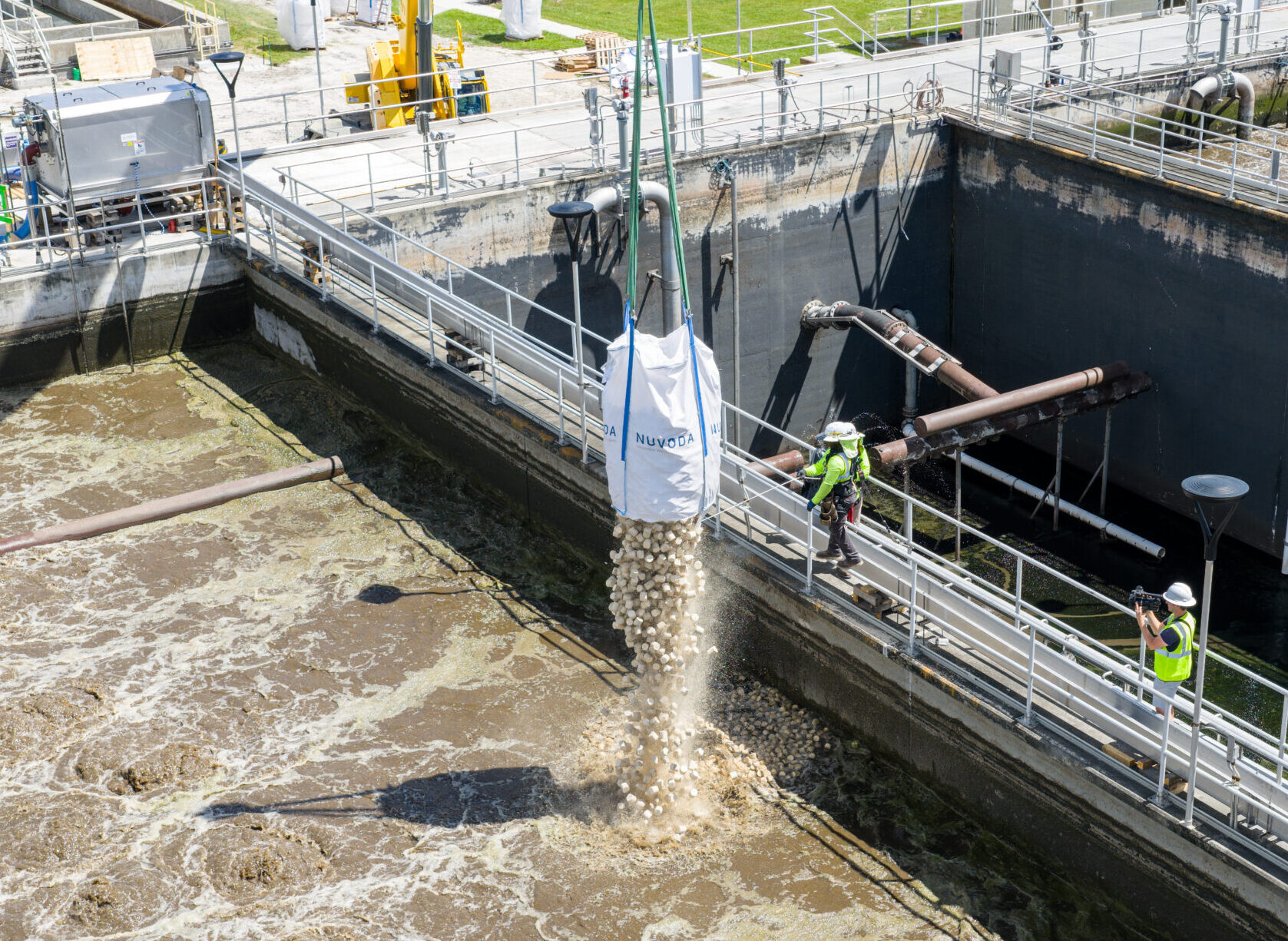
Nuvoda’s Mobile Organic Biofilm (MOB Process®) is a wastewater treatment solution tailored to meet stringent nutrient-removal demands, enhance secondary-sludge settling, and augment the capacity of secondary treatment processes, all while addressing the constraints of existing bioreactor configurations.
Mobile
Organic
Biofilm
Watch: How the MOB Process® Works
MOB Explained:
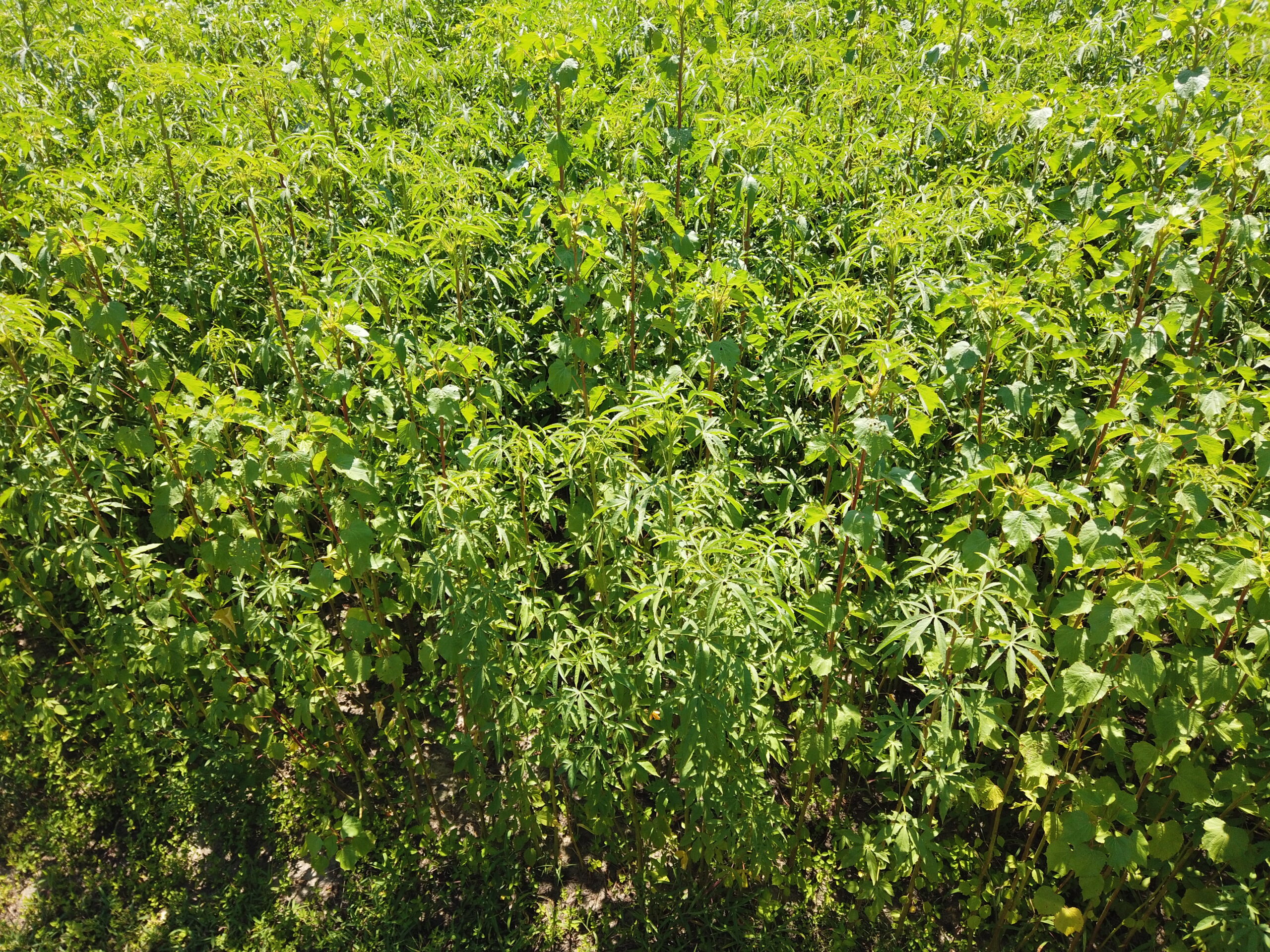
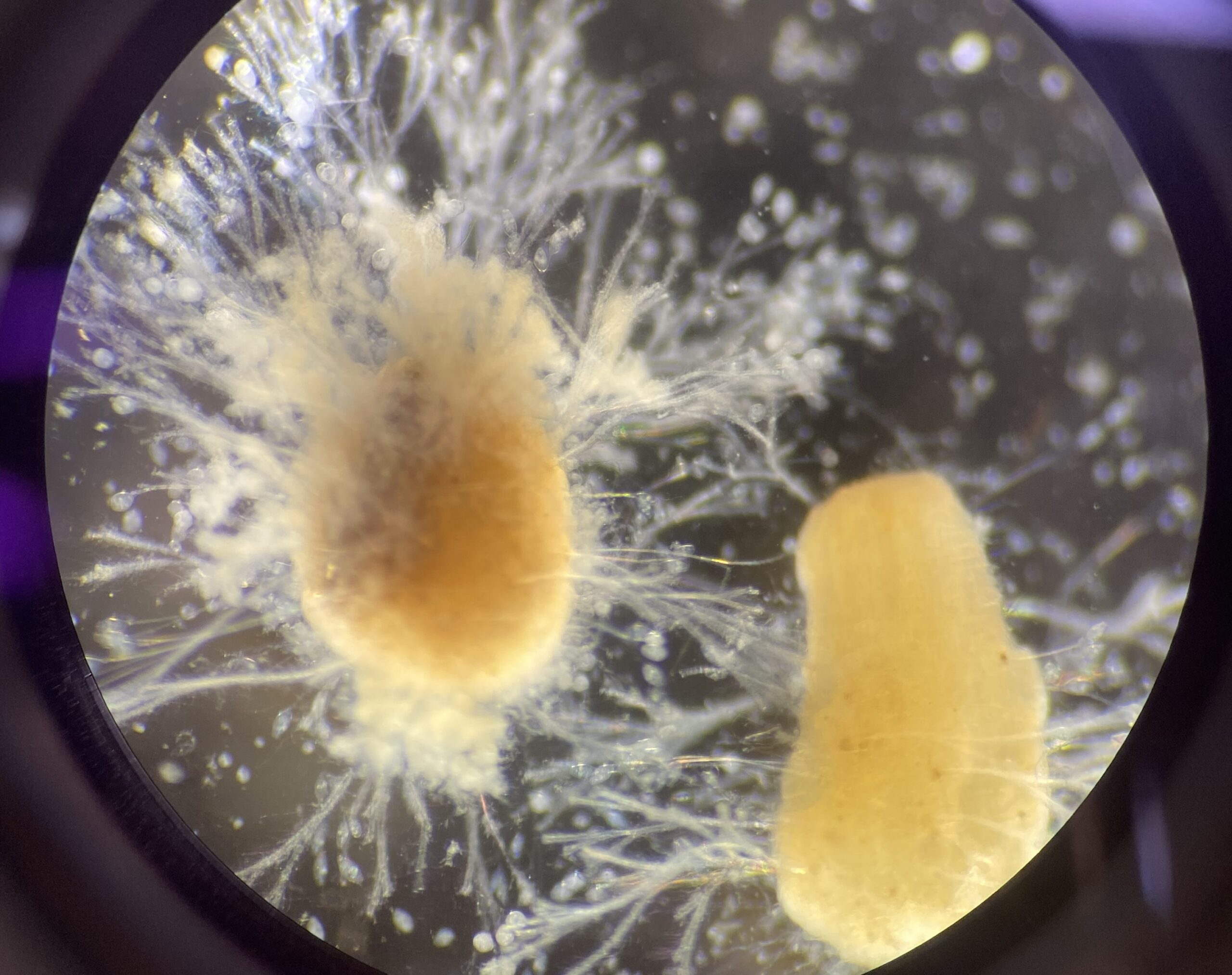
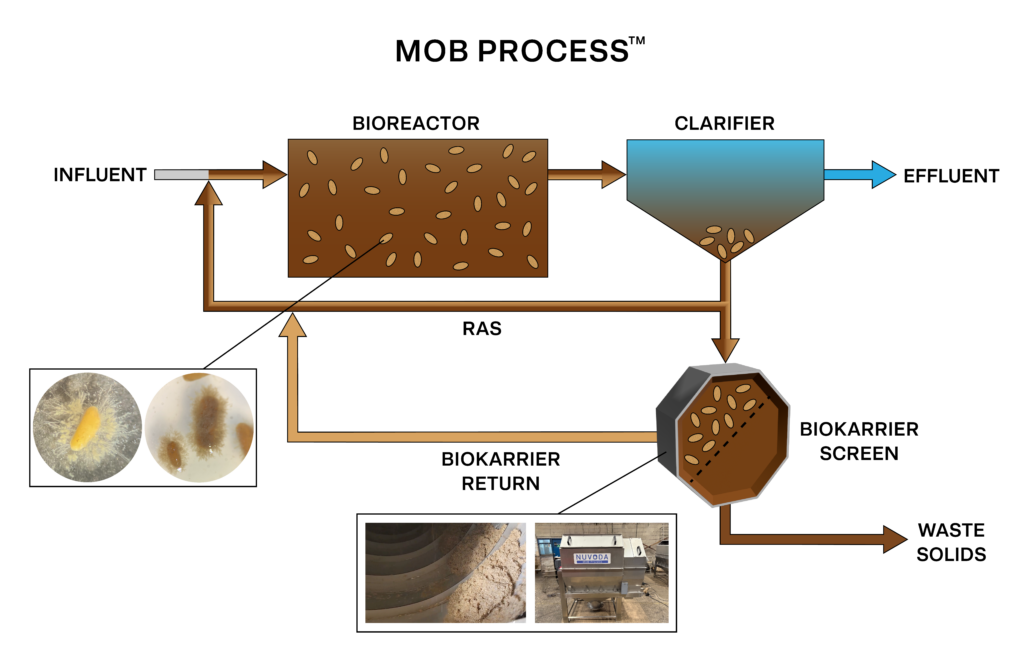
The MOB Process® begins with Nuvoda BioKarrier™, a renewable, lignocellulosic mobile carrier that is added directly to existing secondary treatment basins. Once introduced, the media provides a high surface area for mobile biofilm growth, cultivating layered communities of microorganisms that drive advanced nutrient removal.
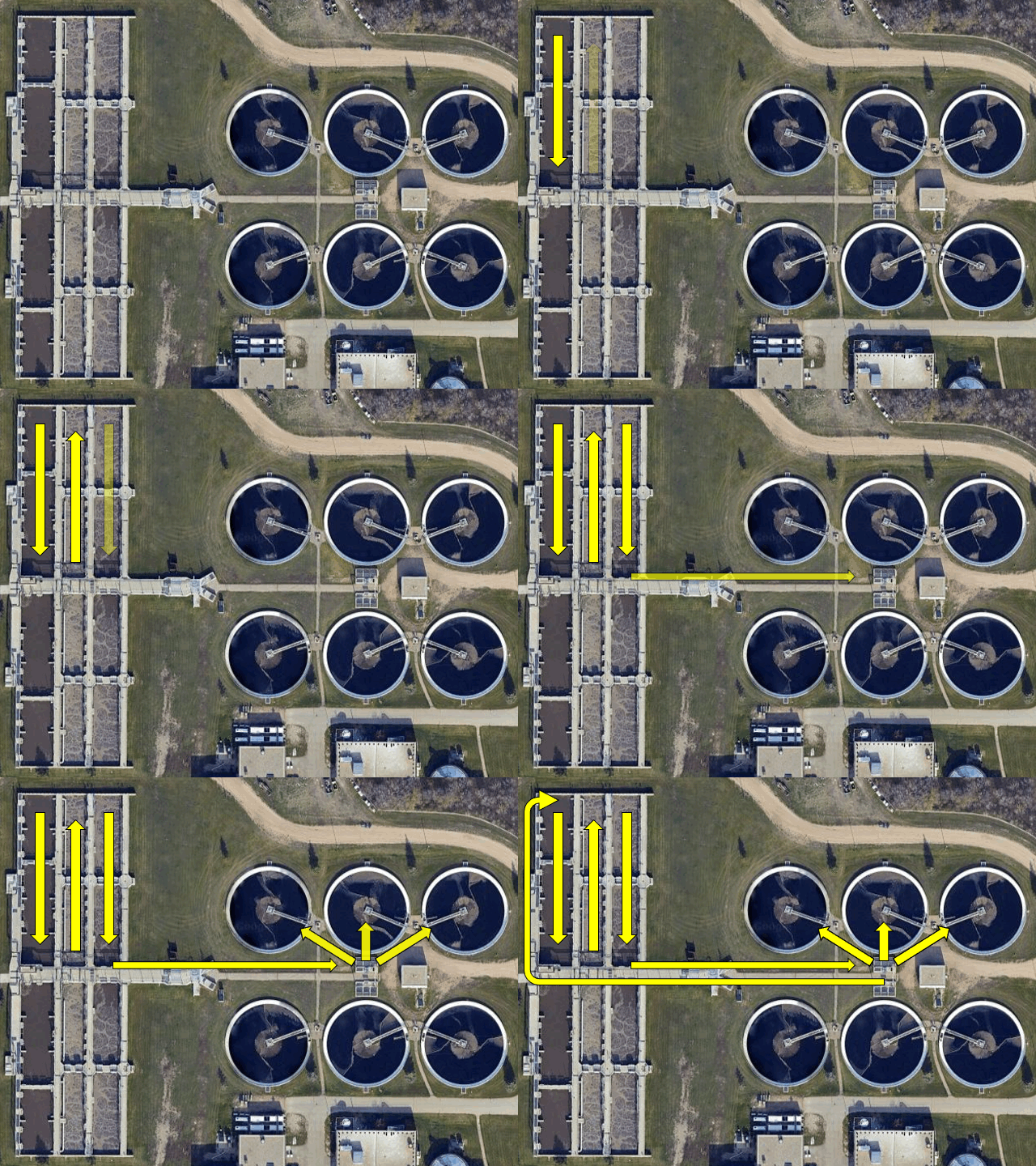
Because BioKarrier™ is fully mobile, it circulates freely between the bioreactor and the secondary clarifier, unlike conventional IFAS, MBBR, or fixed-film system wastewater treatment configurations that confine biological activity to a single zone. This mobility allows BioKarrier’s ballasting properties to simultaneously improve sludge settling and maximize clarifier capacity. A media retention screen acts as a closed-loop physical selector that retains BioKarrier™ media in the system while allowing flocculant sludge to be wasted normally, with no expensive reactor retrofits and no process downtime.
The result is true wastewater intensification: biofilm communities establish within weeks and, once stable, deliver resilience to various influent conditions, such as cold weather nitrification, and year-round performance across varying flows, loads, and temperatures. And because BioKarrier™ is 100% plant-derived, the MOB Process® supports a circular-economy wastewater treatment approach that is renewable by design and plastic-free by principle.
MOB Benefits